
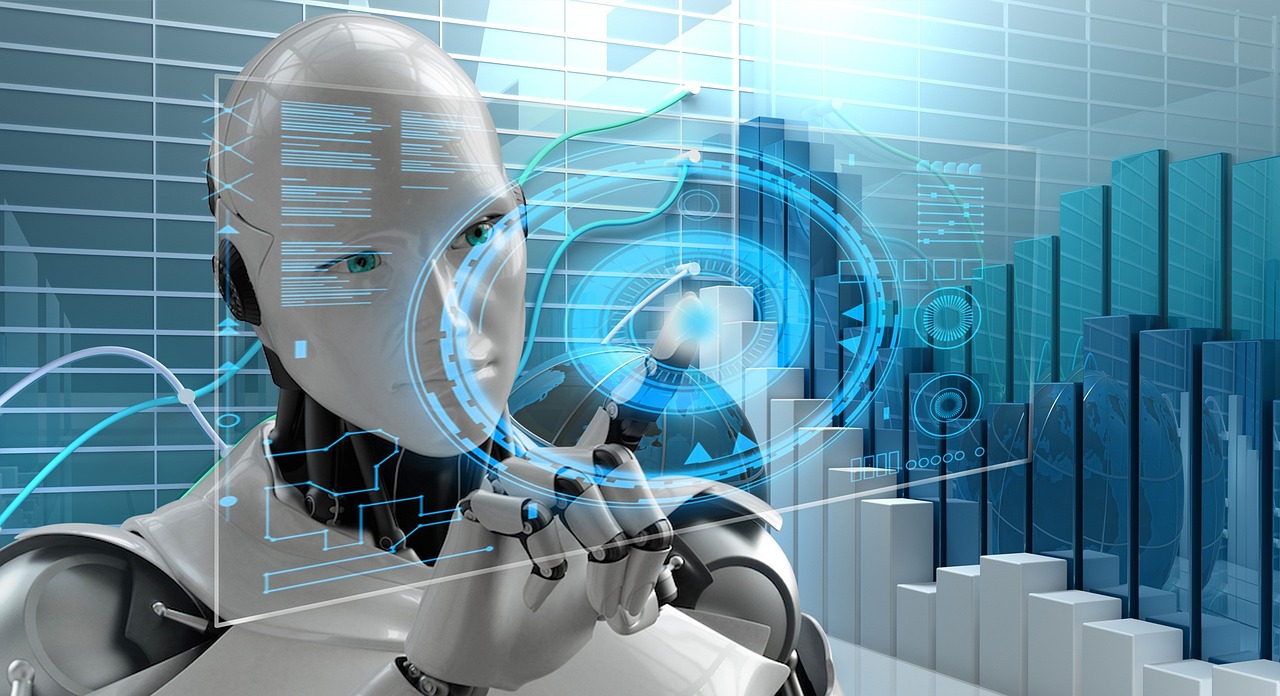
In today’s fast-paced financial markets, technology plays a pivotal role in shaping trading strategies and outcomes. One of the most significant advancements has been the integration of artificial intelligence (AI) in forex trading. For traders looking to enhance their performance and make more informed decisions, understanding the role of AI is crucial.
At its core, AI refers to computer systems capable of performing tasks that typically require human intelligence. This encompasses a wide range of functionalities, including learning, reasoning, problem-solving, and even understanding natural language. In the realm of forex trading, AI has emerged as a powerful tool to analyze vast amounts of data, identify trends, and generate actionable insights.
One of the primary advantages of AI in forex trading is its ability to process large datasets swiftly and accurately. Forex markets generate enormous amounts of data every second, with fluctuations influenced by a myriad of factors: economic indicators, geopolitical events, and social sentiment, to name a few. AI algorithms can sift through this data in real-time, uncovering patterns that may not be immediately apparent to the human eye. This capability allows traders to capitalize on opportunities as they arise, rather than relying on outdated information or intuition.
Moreover, AI-driven trading platforms employ machine learning, a subset of AI that enables systems to improve and adapt based on new data. By continuously learning from past trades and market conditions, these systems can refine their strategies and enhance their predictive capabilities. For traders, this means that the systems can become increasingly effective over time, potentially leading to higher returns and lower risks.
Another noteworthy application of AI in forex trading is sentiment analysis. Sentiment analysis involves using natural language processing to gauge the mood of the market by analyzing news articles, social media posts, and other public communications. Understanding market sentiment can provide traders with insights into potential market movements, enabling them to make more informed decisions. For instance, if there is significant negative sentiment around a currency due to geopolitical tensions, a trader might choose to sell that currency or adopt a more cautious trading strategy.
Risk management is another critical area where AI excels. Volatile forex markets can pose significant risks, and managing these risks is essential for long-term success. AI tools can help traders develop comprehensive risk management strategies by identifying potential risks in real time and providing recommendations for mitigating those risks. This includes setting stop-loss limits and diversifying investments to avoid overexposure to any single currency or market event.
However, while AI offers numerous advantages, traders should also be mindful of its limitations. Artificial intelligence is not infallible; it relies on historical data and algorithms that may not always predict future market behavior accurately. Additionally, over-reliance on automated systems can lead to complacency among traders, who may neglect to conduct their own analysis and due diligence.
In conclusion, AI is transforming modern forex trading by providing traders with enhanced analytical capabilities, real-time data processing, and powerful risk management tools. By leveraging AI, traders can stay ahead of the curve in an ever-evolving market landscape. However, it’s essential for traders to remain engaged and not fully delegate decision-making to AI systems. The best approach combines the strengths of AI with the intuition and experience of human traders, leading to a more informed and balanced trading strategy.
Investment Disclaimer: This analysis is for educational and informational purposes only. Trading “Titan” stocks and scaling into declining markets involves significant risk. Past performance is not indicative of future results. I am not a financial advisor. Please perform your own due diligence or consult a certified financial professional before making any investment decisions.